resources. While it may be
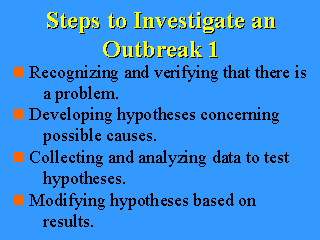
more formal, the development of hypotheses concerning
possible causes is often a subconscious activity based
on experience with local disease problems and conditions.
One generally starts with the most common and well-documented
causes or sources of illness before going to the more
unusual and esoteric. The principals and procedures
used to collect data for outbreak investigations often
differ from those used to collect data for research
purposes. One seldom has time to pilot instruments
or conduct sophisticated sampling and there is somewhat
less emphasis on rigor than on expedience. This does
not justify, however, the use of shoddy study designs
or omission of control groups. Public health
epidemiologists are often called on to defend
their decisions in courts of law and studies
should be able to stand up to a reasonable peer
review. Modifying hypotheses may be a more formal
and repeated process. At its extreme it may
involve input from outside sources and expert
consultants.
|